


|


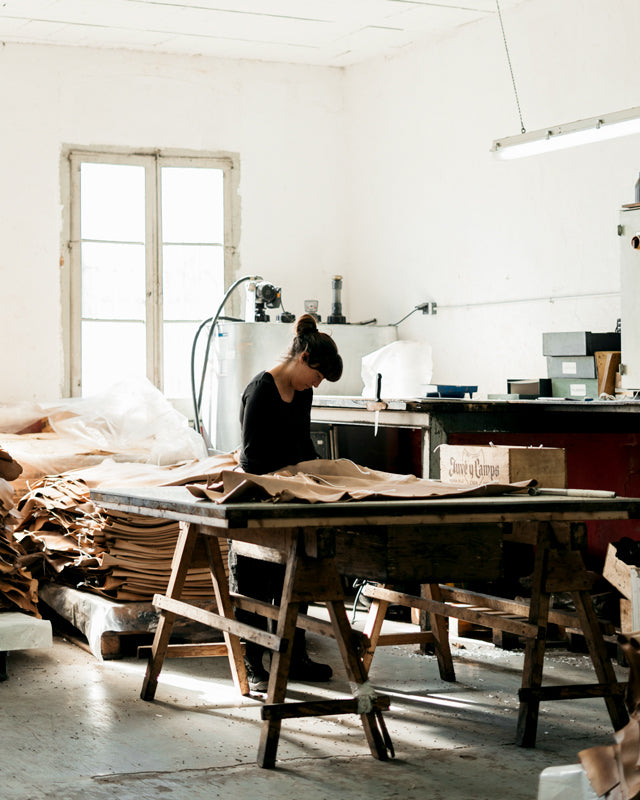
Over time you learn to appreciate good leather by holding the leather sample in your hand and placing it on a table. |
 |  |
Quality has to do with how |
We are absolutely fans of working with vegetable tanned leather.Vegetable-tanned leather is a lush leather that ages gracefully over time. This leather is processed with natural tanning techniques and then placed in slow-moving drums that are soaked in olive oil. It's an eco-friendly process. It's not easy to spot quality leather. A good cowhide should be impeccably clean, free of stains, cuts, or holes, meaning the cows have roamed freely away from barbed wire fences. The tones of the leather should reflect depth and uniformity. Good tanneries often create very interesting color palettes that project the visual power of the hide. |
A key test that distinguishes quality leather from the rest is how it sits on itself. A poor-quality leather sample may feel very upright or completely tasteless.
A good leather sample should have what we call "body" in Spanish, meaning firm but gentle. Over time, you learn to appreciate good leather by holding the leather sample in your hand and placing it on a table. You can then observe whether it has good "body." This test is essential because it will allow you to predict how the leather will behave over time.